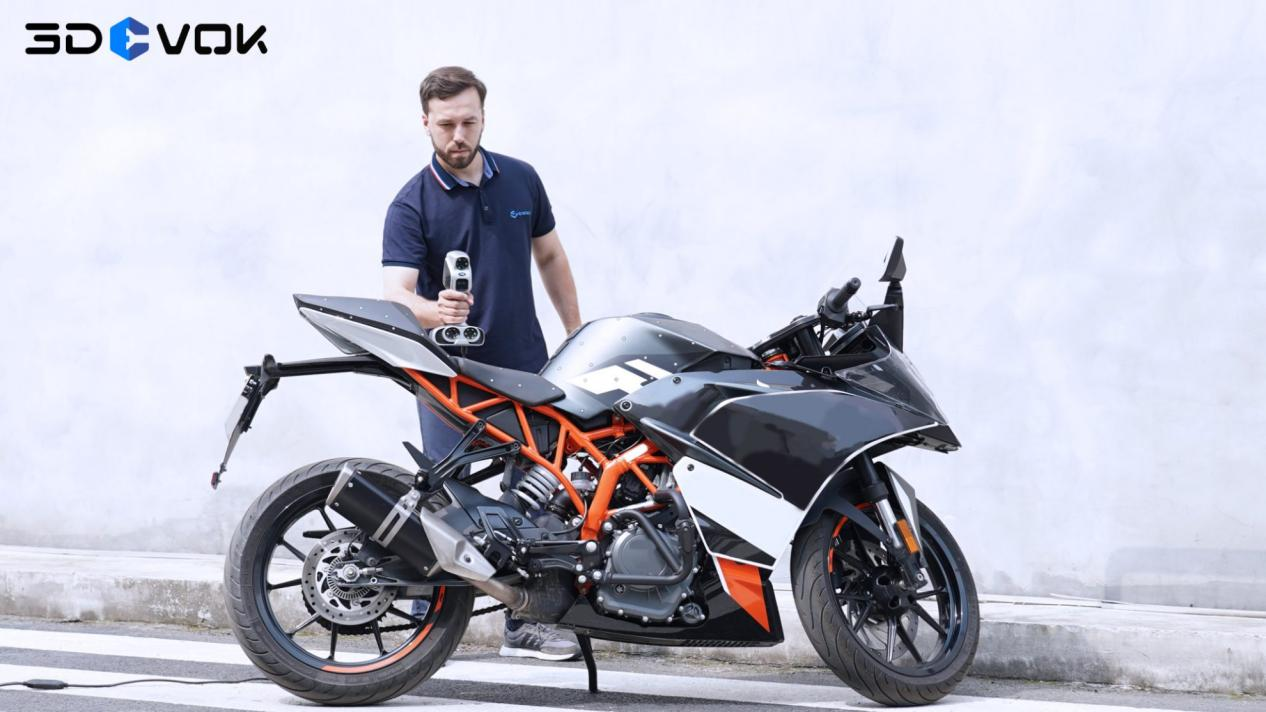
In an increasingly digitized industrial landscape, the question of whether a 3D scanner is truly “worth it” has transitioned from a debate about novelty to a critical assessment of essential operational capability. For many businesses, the high-precision capture of physical objects remains a critical bottleneck, slowing down everything from quality control to product innovation. Yet, leading 3D scanner manufacturing companies like 3DeVOK have developed comprehensive metrology ecosystems that transform this technology from a niche tool into the very backbone of the digital workflow. The true value of a 3D scanner is not measured solely by its initial cost, but by its unparalleled ability to mitigate risk, accelerate timelines, and unlock new commercial and creative opportunities across a diverse clientele—including agents, end-users, engineers, 3D artists, and those in education and cultural heritage. Viewed through this lens of strategic enablement, the investment quickly proves to be one of the most transformative acquisitions an enterprise can make, establishing a competitive advantage that pays dividends far beyond the initial purchase price.
Securing Confidence with Metrology-Grade Accuracy and Assurance
The most compelling argument for the intrinsic worth of a 3D scanner lies in its absolute geometric fidelity—the power to know, definitively and verifiably, the exact shape and size of an object. The cost of a single design error, a failed assembly due to inadequate part fit, or a scrapped production run resulting from a misaligned tool can eclipse the investment in a scanner many times over. Solutions provided by a trusted 3D scanner supplier like 3DeVOK deliver metrology-grade data, meaning the measurements are not estimates but certified, traceable spatial coordinates. This level of precision is essential for engineers working in industries such as furniture manufacturing and automotive, where high precision is required, as both safety and functional integration depend on sub-millimeter tolerances.
For agents and end-users promoting quality, the ability to generate a color-coded deviation map—comparing a manufactured part to its original digital blueprint—provides irrefutable visual proof of quality assurance. This replaces subjective judgment with mathematically quantifiable evidence, streamlining the inspection process and reducing the time spent resolving costly disputes over geometric compliance. Furthermore, by capturing the full, complex surface geometry, the scanner identifies subtle flaws like warping or shrinkage that are simply invisible to traditional point-based measurement devices. This continuous, detailed geometric feedback empowers technicians to correct expensive molds and tools immediately, leading to higher first-pass yield and dramatically reducing overall material waste. The certainty provided by the scanner’s data is the ultimate form of risk mitigation, safeguarding both reputation and profit margins.
Converting Time into Unprecedented Commercial Opportunity
Time to market is very important in today’s competitive market. 3D scanners speed up development by making it possible to quickly digitize real-world objects. Scanning parts into ready-to-print meshes eliminates the need for manual modeling for specialists in 3D printing and prototyping. This lets teams create multiple design versions in the same amount of time that used to be needed for a single prototype.
3D scanners are essential for reverse engineering because they reveal important old information. Systems like those from 3DeVOK can capture complex shapes in minutes instead of weeks. They turn parts with missing CAD data into editable parametric models. This makes it easier to keep and reproduce old parts, and it also makes it easier to do competitive analysis.
3D scanning saves money and cuts down on time to market by turning weeks of manual work into hours of digital processing. This makes projects that were once impossible into real business opportunities.
Cultivating Creative Freedom and Digital Resilience
The worth of a 3D scanner extends beyond industrial metrics into the realms of creativity and cultural longevity. For 3D artists and designers, the scanner is an essential bridge, allowing them to capture the nuanced textures and organic forms of real-world objects and seamlessly integrate them into digital environments, bypassing labor-intensive manual modeling. This not only enhances photorealism but also unlocks new possibilities for customized design, allowing new products to be precisely tailored to existing, irregular forms.
Similarly, in the education sector and cultural heritage preservation, the 3D scanner offers an invaluable ROI on knowledge and history. For educators, the scanner provides students with hands-on experience in cutting-edge metrology and digital workflows, preparing them for the demands of the Smart Industry. For preservationists, the ability to create an accurate, non-contact digital twin of a fragile artifact or an important historical site ensures its geometry is archived against degradation, damage, or loss. The resulting digital model is an asset that can be studied, restored, and shared globally without ever touching the original object. The 3DeVOK commitment as a leading 3D scanner supplier ensures that these versatile solutions are robust enough for the factory floor yet refined enough for the most delicate preservation work. Ultimately, the scanner’s worth is confirmed by its ability to foster resilience—preserving knowledge and providing the flexible data needed for future innovation, guaranteeing that the investment secures not just immediate gains but a perpetual digital legacy.
