Precision agriculture increasingly relies on accurate positioning to improve efficiency and productivity. A RTK base station serves as a critical component in this process, providing real-time corrections to GNSS signals. EFIX has developed solutions that allow farmers and agronomists to achieve centimeter-level accuracy, making operations like planting, spraying, and harvesting more precise and reliable. The technology reduces waste and enhances crop yields by ensuring machinery follows exact paths in the field.
How RTK Base Stations Work
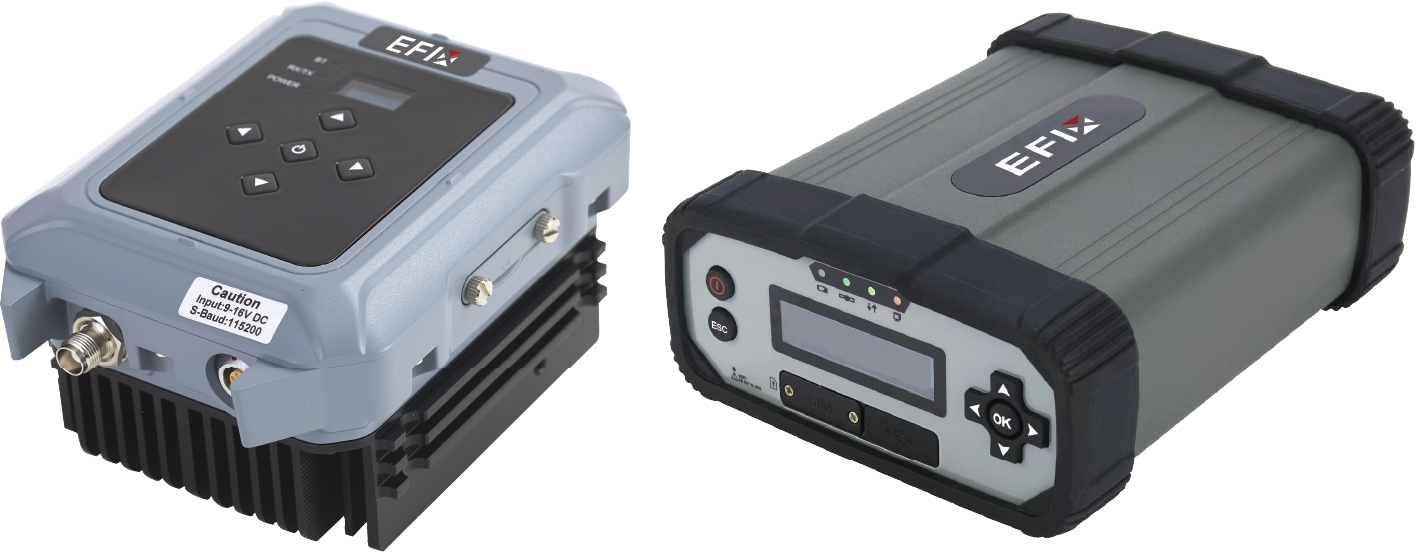
A RTK base station functions by transmitting correction signals to GNSS receivers on mobile equipment. These corrections compensate for errors caused by atmospheric disturbances, satellite orbit inaccuracies, and other factors. They create a real-time link between the base and rover units, allowing machinery to navigate with high precision. EFIX’s F-NET Pro Fixed Base Station exemplifies this capability, integrating an F-NET Pro GNSS receiver and FL3 external radio. Its multi-constellation tracking and large battery capacity ensure that operations remain uninterrupted even in challenging environments.
Key Advantages of Using EFIX Solutions
The F-NET Pro GNSS reference station is designed for reliability and ease of use. Its shock-resistant build, voltage stabilisation, and lightning protection make it suitable for any agricultural setting. Additionally, the FL3 UHF radio modem delivers RTK GNSS corrections over long distances, which is especially useful in remote areas where Ntrip services may be unavailable. With real-time self-diagnosis and status monitoring, EFIX ensures that users maintain accurate positioning without constant manual oversight, improving workflow efficiency.
Conclusion: Why RTK Base Stations Matter
In summary, a RTK base station is essential for modern precision agriculture, providing accurate positioning that enhances productivity and reduces operational errors. EFIX offers advanced GNSS solutions like the F-NET Pro and FL3 radio, which combine robust technology with practical usability. By integrating such systems, farms can optimize machinery performance, maintain consistent crop care, and ensure long-term efficiency. The use of RTK base stations represents a smart investment for anyone seeking to elevate agricultural operations with reliable, real-time positioning data.
