The relentless pursuit of higher productivity, precision, and flexibility defines the modern industrial landscape. Central to achieving these goals are sophisticated motion control solutions, the technological brains behind automated movement. These systems, far more than simple components, are integrated platforms that determine a machine’s speed, accuracy, and intelligence. As a leading provider in this field, Leadshine develops and manufactures a wide array of motion control products that exemplify the key competitive advantages driving industry evolution. For original equipment manufacturers (OEMs) and system integrators, understanding these advantages is crucial for selecting partners and technologies that deliver long-term value and market differentiation. The competitive edge of a modern motion control solution now hinges on its network capability, spatial and economic efficiency, adaptive performance, user-centric design, and embedded safety features.
Network Integration and Communication Architecture Efficiency
A foundational competitive advantage lies in the seamless and high-speed integration of drives and controllers into broader industrial networks. Legacy pulse-and-direction systems are being rapidly supplanted by networked motion control solutions that reduce wiring complexity, enhance data transparency, and enable centralized control. Protocols like EtherCAT and EtherNet/IP have become industry standards for real-time performance. Leadshine’s product development directly addresses this need. Their 2EM3E Series (EtherCAT) and 2EM3EIP Series (EtherNet/IP) Dual-axis Stepper Drives are prime examples of this architectural advantage. These motion control products consolidate control of two independent mechanical axes through a single network node (one IP address). This design dramatically reduces the communication load on the master controller and simplifies the network topology compared to managing two separate single-axis drives.
Optimization of Physical Footprint and Total System Cost
In the design of industrial equipment, every millimeter of panel space and every component cost is scrutinized. Modern motion control solutions compete intensely on the metrics of density and total cost of ownership (TCO). Leadshine demonstrates this through hardware innovation focused on consolidation and miniaturization. The dual-axis drive platform is a strategic response to this challenge. By integrating two axes of control into one housing, these motion control products achieve a substantial reduction in mounting panel area—Leadshine quantifies this as at least a 50% space saving versus two single-axis drives, with a concurrent 10% reduction in unit thickness. This compactness is a decisive advantage for applications in mobile platforms, compact machinery, or high-density control cabinets. From an economic perspective, the cost equation is equally compelling. Procuring and installing one dual-axis unit is inherently more economical than two separate drives, impacting not only the bill of materials but also associated costs like wiring, connectors, and cooling. This holistic approach to cost and space optimization is a critical selling point of advanced motion control products, directly impacting the end machine’s marketability and the OEM’s profitability.
Enhanced Performance and Reliability through Closed-Loop Technology
The performance gap between open-loop steppers and servo systems has been effectively bridged by advanced closed-loop motion control solutions. This represents a major competitive domain, offering a balance of high performance, reliability, and cost. Leadshine’s CS Series Closed Loop Stepper Drives, including the CS3E (EtherCAT) and CS2RS (Modbus RTU) models, are engineered to deliver this advantage. These systems continuously monitor motor position via a high-resolution encoder, instantly correcting for any step loss—a common weakness of traditional steppers. This results in exceptional positional accuracy and the ability to maintain high torque across the entire speed range without stalling. Furthermore, features like anti-hunting algorithms and smooth motion profiles reduce audible noise and mechanical vibration, leading to longer component life and higher product quality in sensitive applications like laser cutting, CNC tool changers, or precision dispensing. For many applications where absolute precision is required but the full dynamic range of a servo is unnecessary, these closed-loop motion control products from Leadshine provide a supremely reliable and cost-optimal solution, enhancing the competitiveness of the end-user’s equipment.
Streamlined Development via Ease of Use and Built-in Intelligence
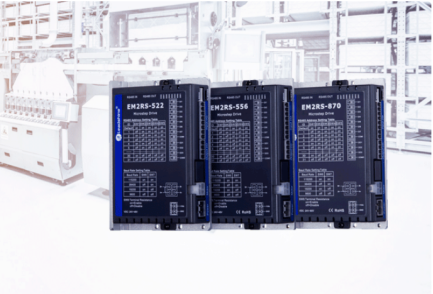
Time-to-market is a critical competitive factor. Therefore, a modern motion control solution must reduce engineering overhead and simplify deployment. This is achieved through intelligent firmware features and intuitive tools. Leadshine embeds significant functionality directly into its drives. For instance, the EM2RS Series stepper drives feature a built-in Position Register (PR) mode with a 16-segment motion table. This allows the drive to execute complex, multi-point sequences autonomously, often eliminating the need for a central PLC in point-to-point applications. This not only lowers system cost but also increases reliability by decentralizing control logic. Similarly, Leadshine’s MC500 series PLCs are designed for developer efficiency, supporting a multitude of industrial protocols (EtherCAT, EtherNet/IP, CANopen, OPC UA) out of the box, which simplifies integration with sensors, HMIs, and enterprise systems. This focus on ease of configuration, programming, and diagnostics across their portfolio of motion control products significantly shortens machine development cycles, providing a tangible competitive advantage to Leadshine’s B2B clients who operate under tight project timelines.
Integrated Safety and Future-Proof System Design
Competitiveness today also encompasses compliance and sustainability. Modern safety standards require functional safety to be designed into machinery. Leading motion control solutions now incorporate safety functions directly at the drive level. Leadshine offers this with an optional Safe Torque Off (STO) feature on drives like the 2EM3E and 2CS3E series. This integrated safety channel allows designers to meet safety performance levels (e.g., SIL/PL) without adding complex external safety relay modules, simplifying cabinet layout and safety validation. Beyond safety, a competitive solution must be future-proof. Adherence to global, open communication standards ensures that a motion control solution remains adaptable and upgradable. Leadshine’s commitment to standards like CiA 402 over EtherCAT guarantees that their products can work within evolving multi-vendor system architectures, protecting the end customer’s investment. This forward-looking design philosophy, evident across their range of motion control products, ensures that partners who choose Leadshine are equipped to build machines that are not only competitive today but also adaptable for the demands of tomorrow.
In summary, the competitive landscape for motion control solutions is defined by multi-faceted advantages that address the core pain points of modern manufacturing: integration complexity, space constraints, cost pressure, performance demands, and safety regulations. Through its focused innovation in networked dual-axis drives, reliable closed-loop technology, user-friendly programmability, and built-in safety, Leadshine has developed a portfolio of motion control products that deliver these critical advantages. By providing these comprehensive and economical solutions, they empower their global B2B clientele to engineer and deploy industrial automation equipment that stands out in terms of reliability, efficiency, and total value, securing a competitive edge in their respective markets.
