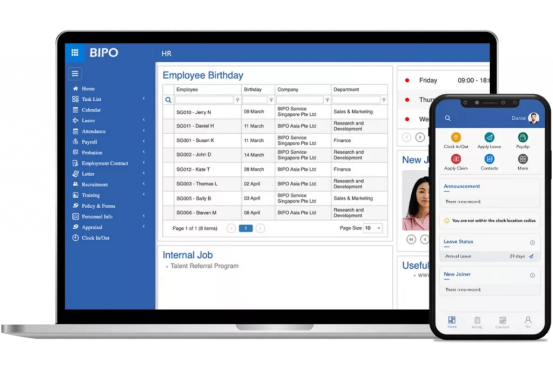
As workforce management becomes increasingly complex, organizations are seeking smarter ways to streamline HR operations while maintaining compliance and employee satisfaction. In 2026, a modern HRMS system is expected to do far more than store employee records. HR leaders need solutions that automate repetitive processes, provide actionable workforce insights, and support hybrid or global teams. Among the most valuable capabilities are a centralized employee database, automated payroll processing, time and attendance tracking, leave management, employee self-service, mobile accessibility, workflow automation, performance management tools, advanced analytics, and compliance management. Together, these features help HR teams improve efficiency while supporting strategic workforce planning.
Why Global Organizations Are Choosing BIPO
Headquartered in Singapore and established in 2010, BIPO is a global provider of HR and payroll solutions that helps businesses manage talent across international markets. Through its proprietary Human Capital Management platform, the company offers integrated HRMS, global payroll, Employer of Record (EOR), HR outsourcing, and compliance services designed for modern workforce management. HR specialists, HR managers, and HR directors looking to simplify HR administration and support global growth are encouraged to explore BIPO’s solutions to discover how a unified platform can enhance operational efficiency and employee experience.
Essential HRMS System Features for Workforce Efficiency
The most effective HRMS system solutions are built to eliminate manual processes while improving workforce visibility. Here are the top HRMS features businesses should prioritize in 2026 to improve workforce productivity, streamline HR processes, and support a more efficient employee experience.
· Automated Payroll Management
Automatically calculates salaries, taxes, bonuses, and deductions to reduce manual work and payroll errors.
· Attendance and Time Tracking
Tracks employee work hours, attendance, overtime, and remote check-ins for better workforce management.
· Recruitment and Applicant Tracking (ATS)
Helps HR teams manage job postings, resumes, candidate screening, and hiring workflows in one system.
· Employee Onboarding Automation
Streamlines onboarding tasks such as document collection, training, and account setup for new hires.
· Performance Management System
Allows managers to set goals, conduct reviews, and monitor employee performance and productivity.
· Leave and Vacation Management
Simplifies leave requests, approvals, and balance tracking while ensuring policy compliance.
· Employee Self-Service Portal
Enables employees to access payslips, update personal information, request leave, and manage HR tasks independently.
· Workforce Analytics and HR Reporting
Provides real-time HR data and insights to support smarter decisions on staffing, retention, and efficiency.
· Learning and Development Management
Helps companies manage employee training, certifications, and skill development programs.
· Mobile HRMS Access
Allows employees and managers to access HR functions anytime through mobile devices, improving flexibility and responsiveness.
Future-Proofing HR Operations Through Data and Compliance
As organizations expand across regions and navigate evolving labor regulations, data-driven decision-making and compliance support become increasingly important. Advanced analytics and customizable reporting allow HR leaders to monitor workforce trends, labor costs, and employee engagement in real time. At the same time, built-in compliance management features help reduce risks associated with payroll, taxation, and employment regulations. By selecting an HRMS system that combines automation, analytics, scalability, and compliance capabilities, businesses can establish a stronger HR foundation and position themselves for sustainable growth in 2026 and beyond.
