Modern automotive and new energy production depends on thousands of joints that must withstand mechanical stress, electrical loads, vibration, and years of service. Even a small variation in weld quality can affect assembly consistency, product reliability, or downstream inspection results. A capable resistance welding systems provider helps manufacturers understand how current, pressure, and welding time interact, allowing production teams to develop stable joining processes that suit their materials and output requirements.
How Precision Welding Affects Manufacturing Quality
Resistance welding generates heat through electrical resistance at the contact area between workpieces. The process relies on controlled current, electrode force, and welding duration to create a joint with suitable strength and consistency. If any variable changes significantly, the resulting weld may show insufficient bonding, excessive indentation, or unwanted expulsion.
Automotive production illustrates why process control matters. Body panels, brackets, battery enclosures, and electrical connections often contain numerous welded joints, each subject to different loading conditions. Consistent welding parameters help reduce variation between components and make inspection results easier to interpret.
For production engineers, resistance welding solutions need to address more than the initial formation of a weld. Electrode wear, surface contamination, material thickness, and changes in contact resistance can all influence performance over time. A process that works well during initial trials may require adjustments as tooling conditions and production volumes change.
Selecting the Right Welding Technology for Automotive and Battery Production
Different components place different demands on the welding process. Automotive body structures commonly require repeatable spot welds across sheet-metal assemblies, whereas battery modules and electrical connections may involve conductive materials, compact joints, and tighter limits on heat exposure. The process must be matched to the joint geometry and material properties rather than selected solely by its rated current.
Material thickness, surface coatings, electrode design, and contact resistance all affect heat generation. Copper and aluminum, for example, have high electrical and thermal conductivity, making their welding requirements different from those of conventional steel. Engineers need to evaluate the complete joint design before establishing current, force, and time settings.
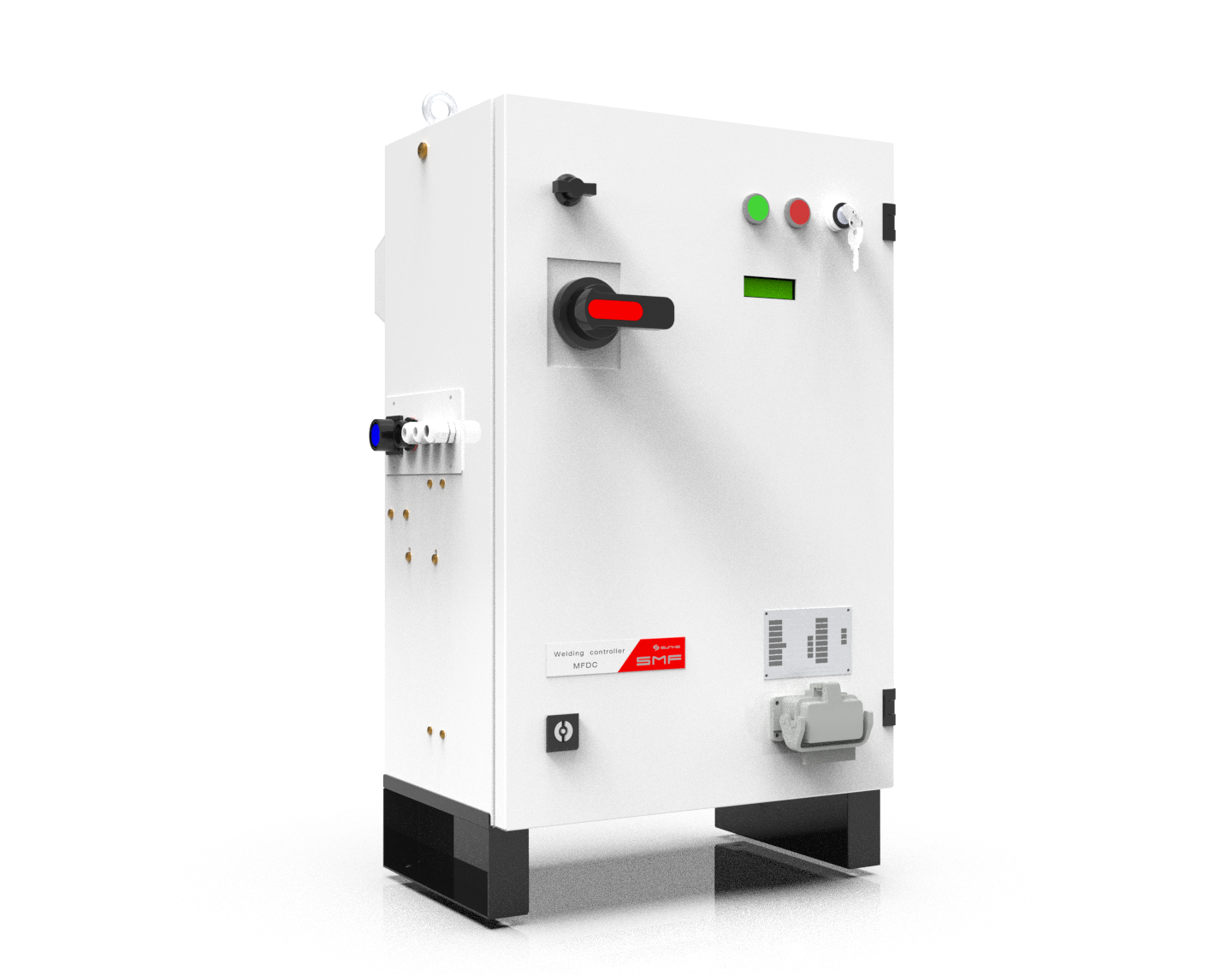
Equipment specifications provide a practical starting point. The SMF Series medium-frequency DC resistance welding controller operates with three-phase AC input from 380 V to 480 V ±10% and offers maximum output-current options from 400 A to 3,600 A. Its programmable welding schedules and available air- or water-cooling configurations support different equipment layouts, although the appropriate configuration depends on the actual process requirements.
How Process Monitoring Supports Consistent Weld Quality
A visually acceptable weld does not always indicate adequate joint strength. Internal defects, insufficient bonding, and excessive heat input may remain undetected until destructive testing or downstream assembly. Manufacturers can reduce this uncertainty by combining visual inspection with process monitoring and periodic mechanical testing.
Current, voltage, resistance, electrode force, and weld duration provide useful information about changing process conditions. Monitoring these variables helps engineers identify abnormal cycles and investigate whether variations originate from material batches, electrode wear, tooling alignment, or control settings. The precise measurements available depend on the installed sensors and monitoring equipment.
For a closer look at how monitoring data can help identify abnormal welding conditions, see this guide on how resistance welding monitoring helps reduce weld defects.
Effective resistance welding solutions also require a clear response to abnormal readings. Production teams can establish acceptable parameter ranges, investigate repeated deviations, and document corrective actions. Process records become particularly valuable on automotive and energy-storage lines, where traceability and consistent quality standards influence production decisions.
What Manufacturers Should Evaluate Before Choosing a Supplier
Equipment compatibility deserves careful attention before a purchasing decision. The controller, transformer, welding gun, electrodes, cooling arrangement, and automation interface must operate as a coordinated system. A mismatch between these components can restrict usable current, complicate commissioning, or create unnecessary maintenance demands. Suppliers should therefore demonstrate how the proposed equipment has been validated as an integrated system, not simply as a list of individual items.
Manufacturers should also examine programming flexibility and integration requirements. A resistance welding systems provider should be able to explain supported communication protocols, control modes, available feedback functions, and the adjustments required for different workpieces. Technical documentation and application testing help determine whether the proposed configuration suits the production environment.
Long-term support matters just as much as the initial equipment quotation. Maintenance access, spare-part availability, troubleshooting procedures, operator training, and engineering assistance all affect the cost of ownership. Comparing suppliers against these operational requirements gives production managers and procurement teams a more useful basis for evaluation than price alone.
Conclusion
Reliable welded joints emerge from the interaction of sound process engineering, suitable equipment, and disciplined production control. Automotive and new energy manufacturers benefit from evaluating each application according to its material characteristics, joint geometry, quality criteria, and automation needs rather than assuming one welding method fits every component.
With experience dating back to 1983, Sunke develops resistance welding controllers, transformers, monitoring equipment, and customized welding systems for industrial applications. Its portfolio provides manufacturers with options to assess against specific technical and production requirements, helping engineering teams make informed decisions about equipment integration, process stability, and long-term manufacturing performance.
