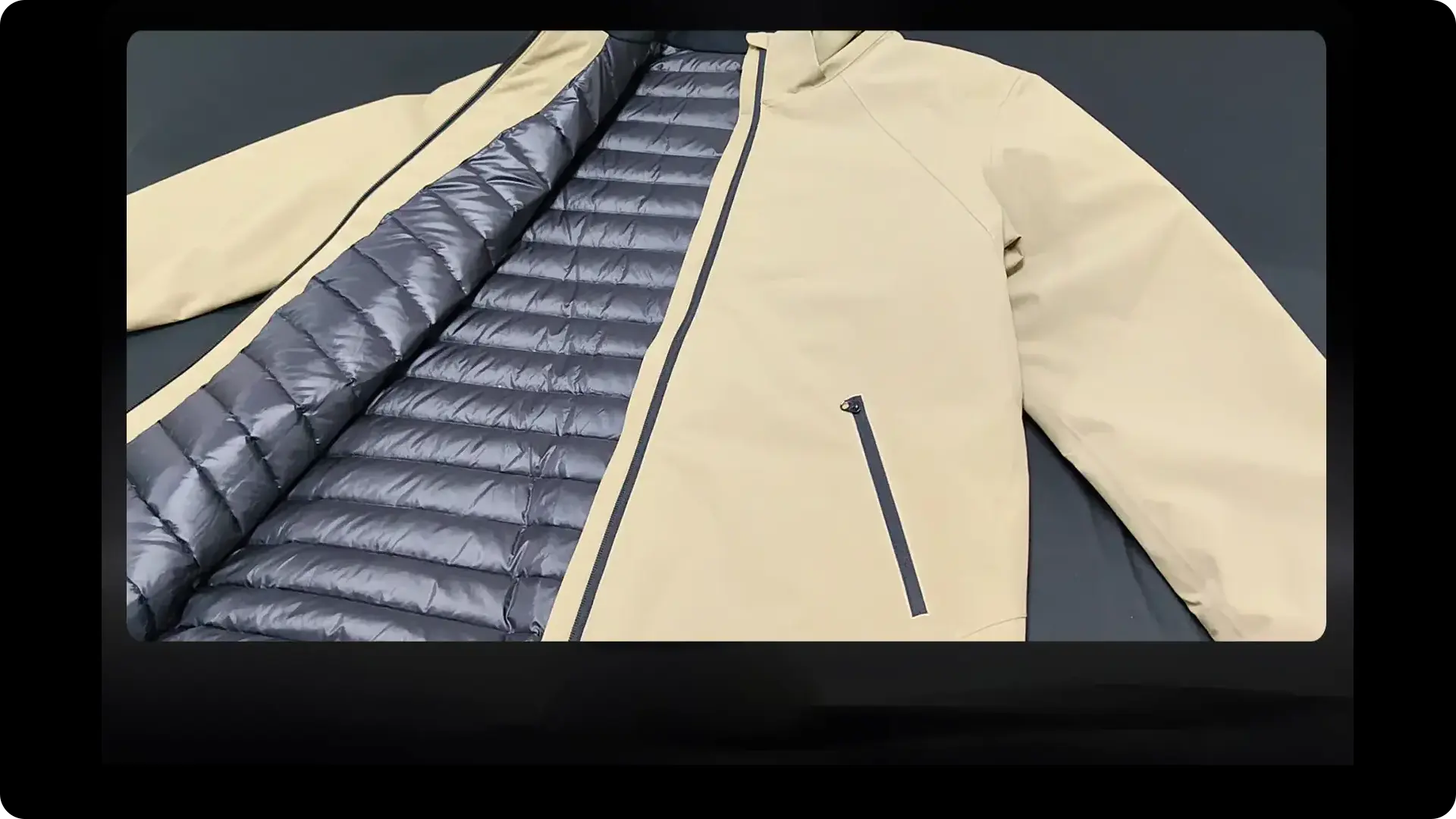
Winter clothing must do more than keep external cold away. During walking, exercise, or physical work, the body releases heat and moisture, and water vapor can travel outward through the garment layers. If that moisture becomes trapped near the insulation, the wearer may experience clamminess, reduced comfort, and a persistent damp sensation.
A permeable vapor barrier is relevant to this challenge because it concerns how moisture moves through a clothing system rather than simply how much water the outer fabric blocks. For Y-Warm, the relationship between moisture management and thermal insulation is an important consideration in functional apparel design.
How Moisture Accumulates Inside Winter Clothing
Perspiration does not always remain in liquid form. Body heat turns some moisture into vapor, which moves from warmer, more humid areas toward cooler, drier parts of the clothing system. The movement depends on differences in temperature and vapor pressure, as well as the resistance offered by each fabric layer.
Problems arise when vapor encounters a layer that restricts its outward movement. As it cools, moisture may condense into liquid water within the garment. Insulation that becomes damp can feel heavier and less comfortable, while moisture against the skin may create a cold sensation during periods of reduced activity.
The risk varies with activity level and weather conditions. A person walking briskly in freezing weather may produce substantial perspiration, while someone standing outdoors may generate less body moisture but face greater heat loss. Clothing designed for both situations needs to balance insulation, ventilation, and moisture transport rather than treating warmth as an isolated property.
What a Permeable Vapor Barrier Actually Does
The term vapor barrier can be confusing because a conventional barrier is generally intended to restrict vapor transmission. A vapor-permeable layer works differently: it allows some water vapor to pass through while providing a degree of resistance to liquid water or external moisture, depending on its construction. Its performance is determined by the material structure and the conditions under which it is used.
A permeable vapor barrier should be evaluated through more than a simple waterproof rating. Moisture vapor transmission rate (MVTR) indicates how much water vapor passes through a material under specified test conditions. The result is useful for comparison, but test temperature, humidity, air movement, and testing method can affect the measured value. Comparisons are meaningful only when the testing conditions are consistent.
Placement within the garment is equally important. A layer positioned between the outer shell and insulation may behave differently from one placed closer to the body. If several low-permeability layers are combined, their cumulative resistance can slow moisture movement even when one individual layer performs reasonably well. Garment designers need to consider the entire assembly rather than judging each fabric separately.
Coordinating Insulation, Shell Fabric, and Inner Layers
Moisture management depends on how the full clothing system works together. The outer shell protects against wind and precipitation, while the insulation slows heat transfer. The lining influences next-to-skin comfort and can affect how moisture spreads across the garment interior. A mismatch between these layers may cause vapor to accumulate at an interface instead of moving outward.
For example, a highly water-resistant shell paired with insulation and lining that offer limited vapor transmission may retain warmth during low activity but feel uncomfortable during strenuous movement. Ventilation openings, adjustable cuffs, and suitable construction details can help release excess heat and moisture. These features are particularly useful in garments intended for changing activity levels.
Material selection also requires attention to the insulation itself. Y-Warm’s thermal insulation technology uses a 0.7 mm thin material structure, allowing garment developers to consider insulation without adding substantial bulk. Its placement and compatibility with shell and lining fabrics should be assessed as part of the complete clothing system, especially where moisture vapor needs a clear path through the layers.
Evaluating Moisture Performance in Finished Garments
Laboratory data provides a starting point, but finished garments should also be assessed under realistic conditions. A fabric’s MVTR does not automatically predict the moisture behavior of a jacket, since seams, coatings, adhesives, quilting, and overlapping panels can alter vapor movement. Even small construction details may create areas where moisture accumulates.
A useful evaluation process combines material testing with wear trials. Test garments can be assessed during different activity levels and weather conditions, with attention to internal humidity, dampness, drying time, and comfort after exercise. Testing should also consider periods of rest, when reduced body heat may make retained moisture more noticeable.
Manufacturers should examine durability alongside initial performance. Repeated washing, abrasion, and flexing may affect coatings, laminates, and bonded interfaces. A permeable vapor barrier that performs well when new may behave differently after extended use, so testing after care cycles can provide a more realistic picture of its service life. Clear product specifications should also state the test method and conditions behind any published moisture-transmission figures.
Conclusion
Dryness inside winter clothing is shaped by the interaction of body moisture, temperature gradients, and the resistance of every layer. A well-designed system allows water vapor to move outward while maintaining the protection and insulation required by its intended use.
For apparel developers evaluating suppliers, a thermal insulation materials manufacturer should be able to explain material structure, relevant performance data, and compatibility with different garment constructions. Y-Warm focuses on thermal insulation solutions for functional clothing, with an emphasis on thin material design and practical garment integration. Apparel teams can consult Y-Warm to assess suitable insulation options for their next cold-weather collection.
