A smile simulator has become an important tool in modern aesthetic dentistry, allowing patients and dentists to preview possible treatment outcomes before procedures begin. However, many people wonder whether these digital previews truly represent the final result. The accuracy of a smile simulation depends on the quality of captured facial data, scanning technology, software analysis, and clinical expertise. With advanced solutions such as SHINING 3D Dental’s MetiSmile, dental professionals can create more realistic and personalized digital smile experiences.
How Does a Smile Simulator Create Digital Treatment Previews?
A smile simulator uses digital technologies to visualize potential changes to a patient’s smile. Instead of relying only on traditional photographs or manual drawings, modern systems combine facial information, dental data, and software analysis to create a three-dimensional representation.
The process usually involves collecting multiple types of patient information:
- Facial surface data captured through a 3D face scanner.
- Intraoral scan data showing teeth and oral structures.
- Treatment design information created by dental professionals.
- Facial analysis data for evaluating aesthetic proportions.
By combining these elements, dentists can create a more comprehensive digital model that reflects the relationship between teeth, lips, and facial features.
However, a smile simulator should be considered a communication and planning tool rather than an exact guarantee of the final appearance. The actual treatment result can still be influenced by factors such as tooth movement, soft tissue response, materials, and clinical execution.
What Makes a 3D Face Scanner Improve Smile Simulation Accuracy?
The accuracy of a digital smile preview largely depends on how precisely facial information is captured. A traditional 2D photograph provides limited information because it only shows a flat image from a specific angle.
A 3D face scanner captures facial shape, contours, and spatial relationships, allowing dental professionals to analyze how a proposed smile fits the patient’s overall appearance.
A high-quality 3D face scanner can help record:
- Facial symmetry and proportions.
- Lip position during smiling.
- Relationship between teeth and facial structures.
- Natural facial characteristics for aesthetic planning.
This additional information helps dentists create treatment plans that consider the entire face rather than focusing only on individual teeth.
How Realistic Are Smile Simulator Results?
The realism of a smile simulator depends on the quality of the digital data and the treatment planning process. When accurate facial scans and dental information are combined, simulations can provide patients with a clearer understanding of possible aesthetic changes.
Modern systems can visualize potential improvements such as:
- Tooth shape adjustments.
- Smile line changes.
- Orthodontic treatment effects.
- Facial aesthetic improvements after dental procedures.
However, digital simulation results are not a prediction generated without limitations. Human facial expressions, soft tissue movement, and individual healing responses can affect the final outcome.
For this reason, experienced dental professionals use smile simulations as a reference for discussion and decision-making. The technology improves communication but still requires professional evaluation.
SHINING 3D Dental MetiSmile Supports More Realistic Smile Planning
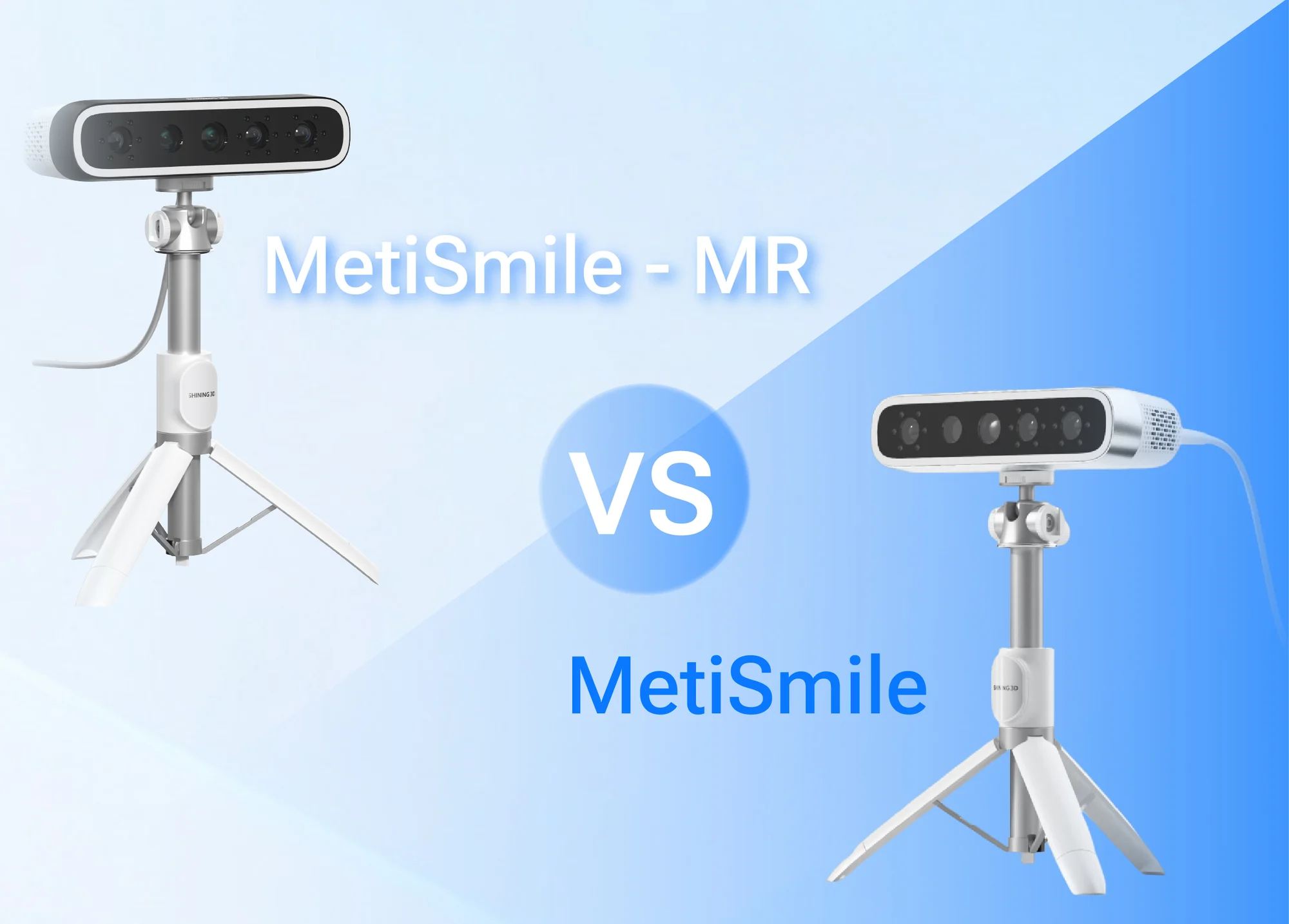
SHINING 3D Dental provides digital dentistry solutions designed to connect scanning, analysis, and treatment planning workflows. One of its key technologies for facial aesthetic applications is MetiSmile, a facial scanning solution developed for digital dental workflows.
MetiSmile combines a high-precision 3D face scanner with intelligent smile simulation technology. It allows clinicians to capture facial data and analyze aesthetic relationships before treatment begins. The system supports digital smile design, facial aesthetic analysis, and orthodontic facial simulation.
According to its specifications, MetiSmile features a data acquisition camera with 1.3 megapixels, an HD texture camera with 5.0 megapixels, and full facial scanning accuracy of 50μm. It supports PLY, OBJ, and STL output formats, allowing compatibility with digital dental workflows and third-party software platforms such as exocad.
With these capabilities, dental professionals can create a more complete virtual patient model by combining facial information with intraoral scan data.
Why Facial Data Matters in Digital Smile Design?
A beautiful smile is not determined only by tooth alignment or color. Facial structure, lip movement, and overall proportions also influence how a smile appears. A 3D face scanner helps dentists evaluate these relationships during treatment planning. For example, a restoration design that looks ideal on a dental model may need adjustment when considered together with facial features.
Digital smile planning allows clinicians and patients to discuss aesthetic goals more effectively. Patients can better understand possible treatment directions, while dentists can create plans based on more complete information. This approach is particularly valuable for aesthetic restorations, veneers, orthodontics, and complex rehabilitation cases.
The Role of AI and Software in Improving Simulation Quality
Software technology plays an important role in making smile simulations more realistic. Advanced digital systems can analyze facial landmarks, align different data sources, and support personalized treatment planning.
MetiSmile includes facial aesthetic analysis functions that recognize facial features and provide tools for measuring facial proportions and comparing potential treatment changes. These functions help dentists evaluate aesthetic outcomes from a three-dimensional perspective.
By integrating facial data, dental scans, and treatment designs into one digital environment, clinicians can improve communication and reduce misunderstandings between patients and dental teams.
What Factors Affect Smile Simulation Accuracy?
Although digital technology has improved significantly, several factors still influence how closely a simulation matches the final result.
Important factors include:
- Quality of scanning data: More complete and accurate facial and dental information improves simulation reliability.
- Treatment complexity: Simple cosmetic changes may be easier to visualize than complex full-mouth rehabilitation.
- Clinical experience: Dentists must interpret digital results based on professional knowledge.
- Patient characteristics: Facial expressions, muscle movement, and healing responses vary between individuals.
Therefore, the most effective approach is combining advanced technology with professional treatment planning.
Conclusion
Smile simulator results can be highly realistic when supported by accurate digital data, advanced software, and professional clinical experience. While simulations cannot guarantee an identical final outcome, they provide valuable visual guidance for treatment planning and patient communication.
With technologies such as SHINING 3D Dental‘s MetiSmile, dental professionals can use a reliable 3D face scanner to capture facial information and create more personalized digital smile experiences. As digital dentistry continues to develop, smile simulation will become an increasingly important tool for improving aesthetic planning and helping patients make confident treatment decisions.
