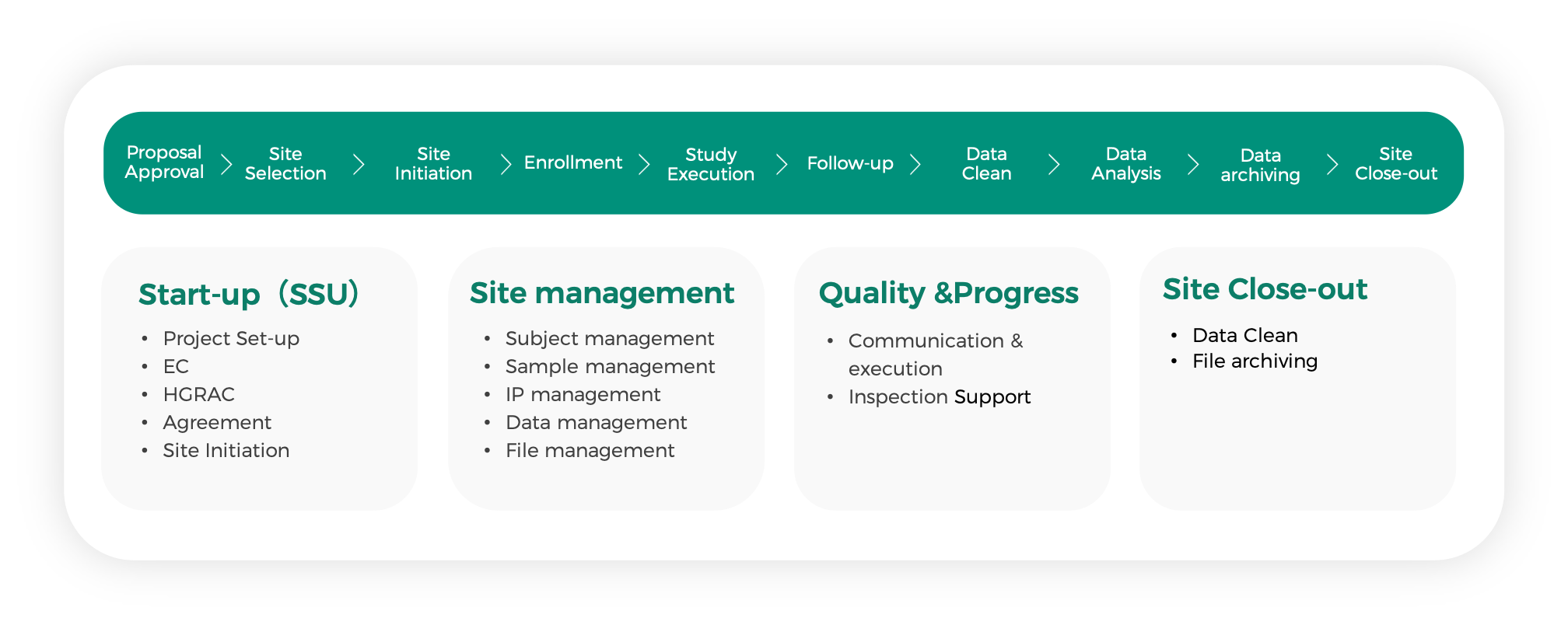
A clinical trial’s success depends not only on its scientific design but also on the ability of participating sites to carry out study procedures accurately and consistently. Differences in staffing, patient availability, administrative capacity, and familiarity with clinical research can create considerable variation in site performance. A structured clinical trial site management approach addresses these challenges throughout the study lifecycle, from initial feasibility assessments to final documentation and closeout.
Behind reliable site operations lies a combination of qualified personnel, clear communication, regulatory compliance, and continuous performance evaluation. These factors also explain why sponsors often work with a specialized site management organization to support clinical research activities across multiple locations.
Site Qualification and Preparation Before Study Activation
Site selection establishes the operational foundation of a clinical investigation. Before a research center is approved, sponsors and clinical operations teams should evaluate its patient population, investigator qualifications, available facilities, previous research experience, and capacity to follow the proposed protocol. A feasibility assessment should examine whether the site can recruit eligible participants within the expected timeframe rather than relying solely on its stated enrollment estimates.
Investigator experience is another important consideration. A qualified principal investigator should understand the therapeutic area, have sufficient time for study responsibilities, and demonstrate familiarity with applicable ethical and regulatory requirements. The availability of trained study coordinators, laboratory personnel, pharmacists, and other supporting staff also influences whether a site can perform its assigned activities reliably.
Once a location passes qualification, preparation moves toward regulatory submissions, ethics committee approval, essential document collection, and staff training. Site personnel need to understand the protocol, informed consent procedures, safety reporting obligations, and investigational product handling requirements. A structured clinical trial site management process tracks these prerequisites so that activation does not proceed before the necessary approvals and documentation are in place.
Accelerating Site Start-Up Through Effective Coordination
Start-up delays frequently arise from administrative dependencies rather than scientific obstacles. Ethics review, contract negotiation, budget approval, investigator documentation, and local regulatory authorization may involve different departments and external stakeholders. A start-up tracker can assign responsibility to each activity, record submission dates, and highlight outstanding items requiring follow-up.
Communication between sponsors, CRO project managers, investigators, and institutional research offices is particularly important during this phase. Standardized document templates and clearly defined review procedures can reduce avoidable revisions. However, local institutional requirements still need individual attention because approval processes and documentation expectations vary between research centers and countries.
Staff readiness should receive the same attention as administrative preparation. Study coordinators need appropriate training in protocol procedures, electronic data capture systems, source documentation, and participant communication. An experienced site management organization can provide operational support by coordinating site activities, monitoring readiness, and helping research centers respond to changing workloads or activation schedules.
Maintaining Performance and Managing Protocol Deviations
Once enrollment begins, site performance requires regular assessment rather than occasional checks at major milestones. Useful indicators include screening numbers, enrollment conversion rates, participant retention, visit compliance, data query volume, and the timeliness of safety reporting. Reviewing these measures together provides a more balanced picture than relying on recruitment figures alone.
Performance variations should be interpreted in context. A site with slower enrollment may serve a smaller patient population, while a high-enrolling center may experience difficulties with documentation quality or participant follow-up. Monitoring teams should investigate the reasons behind performance changes before recommending corrective measures. Additional coordinator support, refresher training, or adjustments to recruitment communication may address the underlying problem more effectively than repeated reminders.
Protocol deviations require a separate but closely connected management process. Each deviation should be documented, assessed for its impact on participant safety and data integrity, and reported according to applicable requirements. Repeated deviations may indicate unclear procedures, insufficient training, or unrealistic site workflows. Effective clinical trial site management includes root-cause analysis, corrective and preventive actions, and follow-up assessments to determine whether the proposed measures have addressed the issue.
Managing Site Resources and Conducting an Organized Closeout
Clinical research workloads rarely remain constant throughout a study. Recruitment peaks, protocol amendments, staff turnover, and changes in enrollment timelines can place unexpected pressure on site personnel. Sponsors and CROs should periodically review resource allocation and identify whether additional coordinator capacity or specialized training is needed. Flexible staffing arrangements can help maintain operational continuity without creating unnecessary administrative burdens.
A skilled clinical research coordinator contributes significantly to this process. Tigermed’s Site Management Organization (SMO) provides clinical research coordinator (CRC) services, emphasizing quality deliverables, timely and budget-conscious execution, and personnel trained in ICH-GCP and applicable local GCP requirements. Its approach also incorporates service orientation and flexibility in response to fluctuations in study workload and timelines. These capabilities reflect the importance of combining standardized research practices with practical support for individual clinical sites.
Closeout begins once the site has completed its study-related activities, but the process involves more than confirming that the final participant visit has taken place. Outstanding data queries must be addressed, investigational products reconciled, essential documents reviewed, and required records archived according to applicable retention requirements. The research team should also confirm that outstanding safety information and financial or administrative matters have been appropriately handled.
A formal closeout checklist helps sponsors and investigators verify that responsibilities have been fulfilled. Final monitoring activities can identify unresolved documentation issues, while communication with the site clarifies archival arrangements and any remaining obligations. A capable site management organization can coordinate these tasks, helping sites transition from active study conduct to an orderly record-retention phase without overlooking important regulatory responsibilities.
Conclusion
Site performance is shaped by a sequence of connected decisions, beginning with investigator selection and continuing through staff training, participant management, quality oversight, and final record archiving. Each phase introduces different operational demands, so a fixed management approach may not address every challenge encountered during a study.
Tigermed draws on its clinical research experience to support site coordination, quality-focused execution, and flexible resource planning. With clear responsibilities and appropriately trained personnel, clinical trial site management becomes a structured process that supports reliable study conduct from activation through closeout.
